SEPT 15 - JAN 4
Base phase: sixteen weeks
Building the engine. High volume, aerobic foundation, and structural integrity training.
I didn’t start this thinking about the event.
I started it because, quite honestly, there were too many things I couldn’t do.
The beginning
Running was one of them.
My first run was 6km. It took just over 41 minutes, and it felt harder than it should have. Not dramatic, not heroic, just uncomfortable in a very honest way. Ankles taking a beating, shins tightening up, knees quietly complaining. Nothing catastrophic, but enough to know something wasn’t right.
It wasn’t a running problem. It was a structure problem.
Swimming was worse.
I could stay afloat, move forward, and that was about it. No rhythm, no efficiency, just a slow, highly panicked negotiation with the water. The kind where you’re never quite sure who’s winning.
And the ocean? I didn’t trust it. Still don’t, entirely.
Cycling was new.
No road bike yet, so I used the assault bike. Legs only. At first, 20 minutes felt like a wall. Not a dramatic collapse, just that quiet moment where your body starts looking for shortcuts. Mine found them in my arms.
Then there was strength.
Squats sat somewhere around 80–90kg. Not terrible, but not reassuring either. My legs didn’t feel like something I could rely on over long durations. More like something that might cooperate, depending on the day.
And overhead mobility… limited. Enough to know that swimming properly would be a problem later.
The Goal of the Base Phase
So the goal wasn’t to get better at one thing.
It was to become someone who could handle training in the first place.
How Training Was Structured
The base phase was simple in theory.
Do more. Handle more. Recover from more.
Not by pushing intensity, but by building tolerance.
Most days were split in two.
Endurance earlier in the day. Strength later.
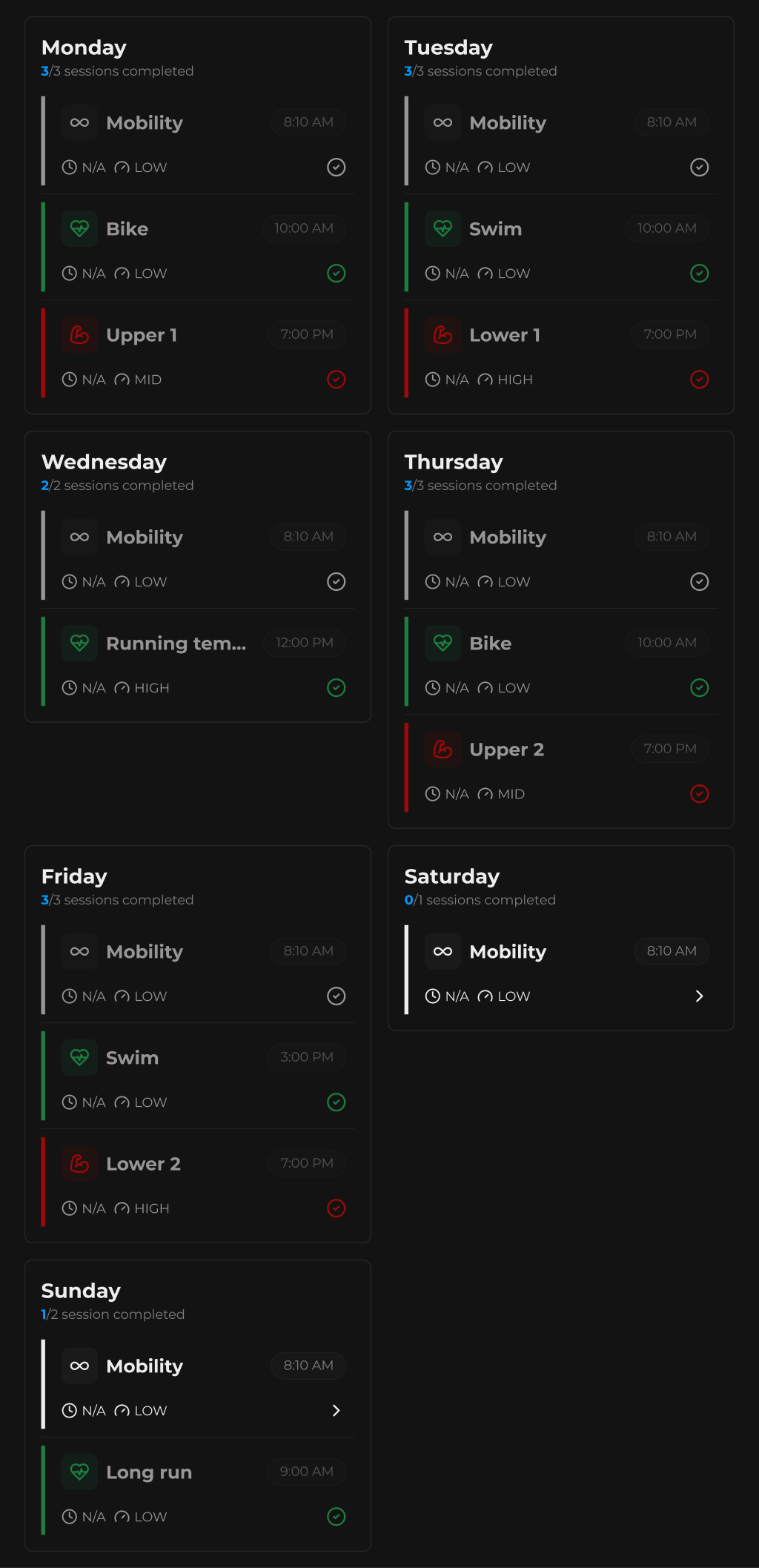
Nothing fancy about the structure:
- Bikes were long and steady
- Runs were uncomfortable but controlled
- Swims were mostly technique and figuring things out
And strength work followed a rhythm: explosive → strength → unilateral → work capacity
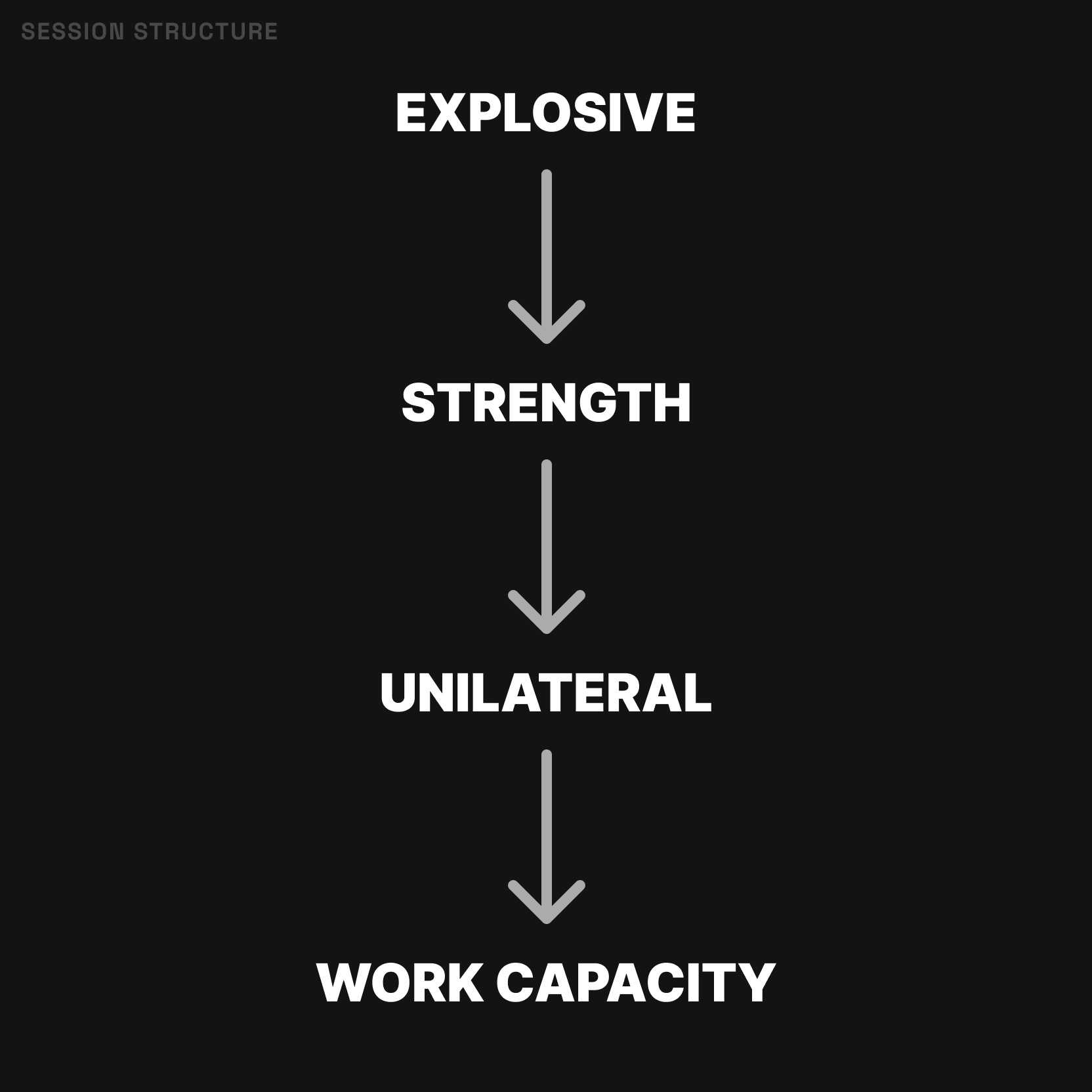
Not because it looks good on paper, but because it covered what needed to be covered.
There was a lot of variety.
Crawling, carrying, lunging, pulling, pushing. It’s not exciting, but the body seems to respond well when it’s not boxed into one pattern too early.
Progression (Volume, Then a Step Back)
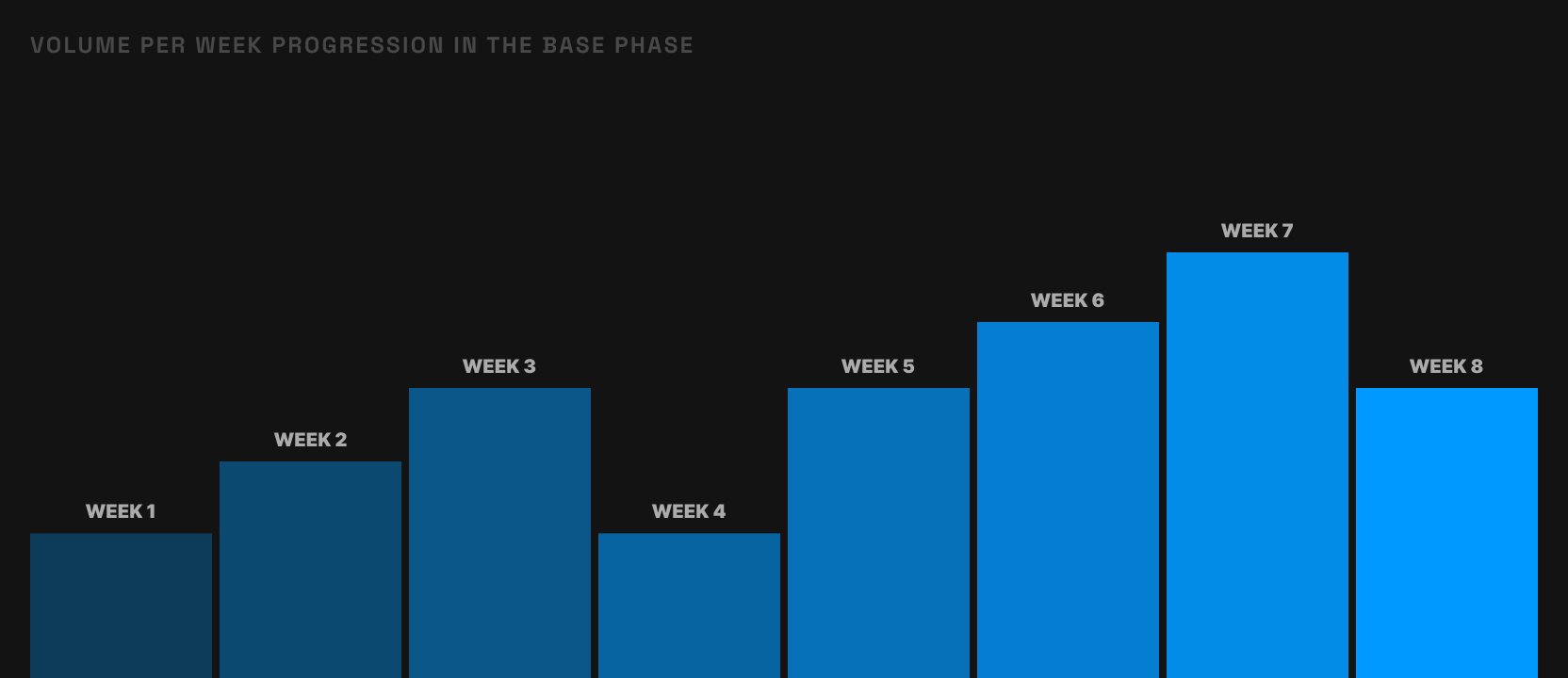
Progression came from volume.
Each week, a little more.
Then every fourth week, a step back. Not as a break, but as a way to absorb what had been done.
It wasn’t glamorous. Just consistent.
The Mistake (Ignoring the Small Stuff)
One mistake, though.
I knew my ankles needed work. I knew my shoulders would be an issue.
I kept pushing it to “next week.”
Eventually, the body made the decision for me.
Shin splints showed up. Shoulders started complaining. Week 12 became a rest week, not by design, but by necessity.
What Changed After That
After that, things changed.
More attention to details:
- ankle strength work
- isometric holds
- shoulder rotations
- small, unremarkable exercises that quietly keep things together
Not exciting, but very useful.
Where I Landed
By the end of the phase, things had shifted.
Not dramatically, but noticeably.
I could:
- stay longer on the bike (legs only)
- swim with something that resembled technique
- run further without everything breaking down
One of the last weeks looked like this:
- 82 miles on the assault bike
- 3.4km of swimming
- a half marathon at the end
The half marathon took 2 hours 28 minutes.
Not fast.
But it was done:
- midday
- no fuel
- no water
- slightly sick
- still dealing with shin pain
It wasn’t pretty. But it was possible.
Physically, I went from 86kg to 90kg.
Stronger legs. More confidence under load. Shoulders still limited, but better understood.
The Real Result
What changed the most wasn’t performance.
It was how the work felt.
Less fragile. Less hesitant. More predictable.
The Takeaway
If anything, this phase made one thing clear:
The body doesn’t need to be pushed immediately. It needs to be prepared.
It’s tempting to rush this part.
To specialize early. To chase intensity. To “get to the real training.”
But this is the real training.
If I had more time, I’d stay here longer.
Not because it’s comfortable, but because it makes everything that follows more stable.
Nothing in this phase was impressive on its own.
But together, it built something useful:
The ability to keep going, and to come back the next day ready to do it again.